Many people think that leaving an abusive situation is the last step in escaping domestic violence, but for many survivors, it’s just the beginning. There is so much more to recovery after leaving an abusive situation, and self-care plays an important role in recovery. It’s important to not only recognize the emotional and psychological impact that domestic violence leaves behind but also why self-care is so crucial in the healing process. Prioritizing needs can feel unfamiliar for survivors of domestic violence, which is why self-care is so important.
What Is Mental Health?
According to the World Health Organization, mental health is “a state of mental well-being that enables people to cope with the stresses of life, realize their abilities, learn and work well, and contribute to their community.” This includes your emotional, psychological, and social well-being, all of which can be harmed by being in an abusive situation.
Domestic violence can have long-term effects on mental health, including anxiety, depression, PTSD, panic attacks, and chronic stress. An abusive environment can also contribute to emotional disregulation, fear, and social isolation, which can further exacerbate mental health conditions. Survivors of domestic violence also often internalize abuse, which leads to self-blame, low self-esteem, and difficulty forming relationships.
How Trauma Rewires Your Brain
One of the most difficult effects of domestic violence is the way trauma can impact the brain. Trauma completely changes the way your brain works by rewiring your threat-response system. This can make survivors more reactive to perceived danger, leading them to feel constantly on edge, easily startled, or detached. When your brain is constantly in survival mode, daily life can be exhausting. This is where self-care can help survivors slowly reconnect with themselves physically and emotionally. Self-care looks different for everyone.
Self-Care and Mental Wellness
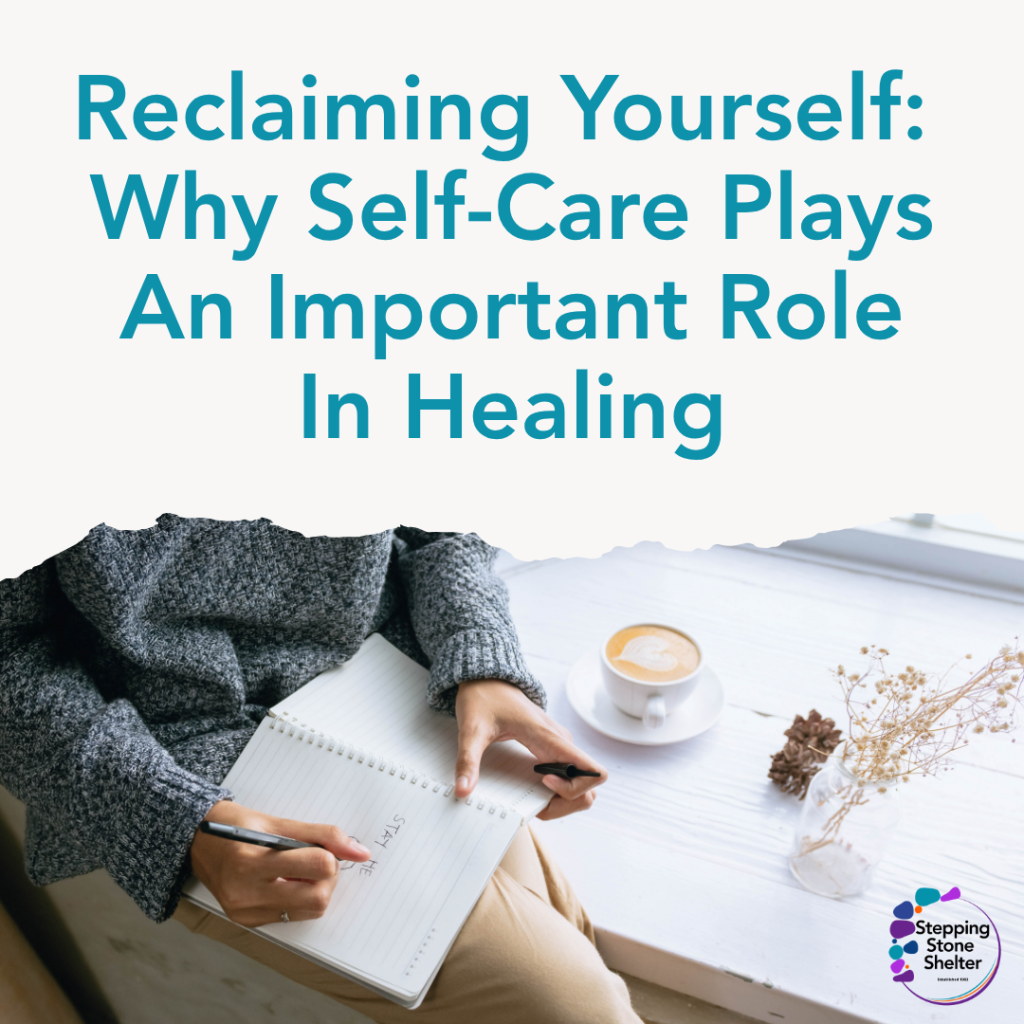
The first thing that comes to mind when hearing the phrase ‘self-care’ may be a relaxing face mask or having a spa day. Self-care is often misunderstood as indulgent, but the truth is that self-care means taking the time to do things that help you live well and improve. Although activities like these can be beneficial, true self-care goes much deeper, and for many, it can be an essential part of healing. For some, attending regular therapy sessions can be beneficial, for others, it may be setting boundaries. Here are some benefits to practicing self-care:
- Regulates the nervous system: Mindfulness, yoga, and breathing techniques help manage the fight-or-flight response, allowing the thinking brain to take over.
- Restores autonomy: Survivors of domestic violence often feel powerless. Acts of self-care help survivors reestablish self-control over their lives.
- Helps to process emotions and trauma: Journaling, meditation, and exercise help survivors safely process their experience rather than repress it.
- Rebuilds self-worth: A regular self-care routine can help reinforce self-worth.
- Physical relief: Physical activity can help release tension, reduce pain, and produce endorphins.
- Encourages reconnection: Abusers often isolate as a tactic to establish control over survivors. Connecting with trusted friends can break the isolation caused by an abusive relationship.
Different ways to practice self-care can look like:
- Regular exercise
- Eating healthy, regular meals
- Staying hydrated
- Making sleep a priority
- Trying a relaxing activity, such as meditation, muscle relaxation, or breathing exercises
- Engaging in an activity that you enjoy, such as listening to music, reading, spending time in nature, or doing other low-stress activities
- Set goals and priorities
- Practice gratitude
- Focus on positivity
- Staying connected to others
You’re Not Alone
Self-care is incredibly valuable in your healing journey, but it’s important to know that just because it’s called ‘self’ care, doesn’t mean you have to do it alone. Therapy, advocacy organizations, support groups, trusted friends, and community resources can all provide essential support during recovery from domestic violence. If you or someone you know needs help, support, advocacy, or just someone to talk to, you can call our 24 hour hotline at: 866-879-4615